
It can truly feel like a jungle when trying to figure out what rabbits can eat. One tip is to try to mimic the diet that wild rabbits live on, which consists of various types of leaves, herbs, branches, flowers, and shrubs.
If rabbits have a varied diet, they don’t necessarily need to eat pellets. Pellets make rabbits feel full quickly and don’t wear down their teeth, which is important for their diet to do. It’s more common for rabbits to become overweight and/or develop dental problems if they are given too many pellets.
We will delve more into the question of pellets in the future.

Our domestic rabbits don’t have the ability to understand what is poisonous or unhealthy for them, so it’s important to never give anything that could be toxic. If you’re unsure, it’s better not to give it at all.
Different houseplants and cut flowers can be really harmful for rabbits to ingest, so it’s best to keep them at a safe distance from the rabbits.
Keep in mind that rabbits are good jumpers and, like cats, can jump onto window sills or over barriers. One of my own foster rabbits managed to jump and climb over a one-meter fence. She jumped as high as she could and climbed the last bit over the fence, one paw at a time, before throwing herself over. A real little daredevil! (Or just very adventurous)
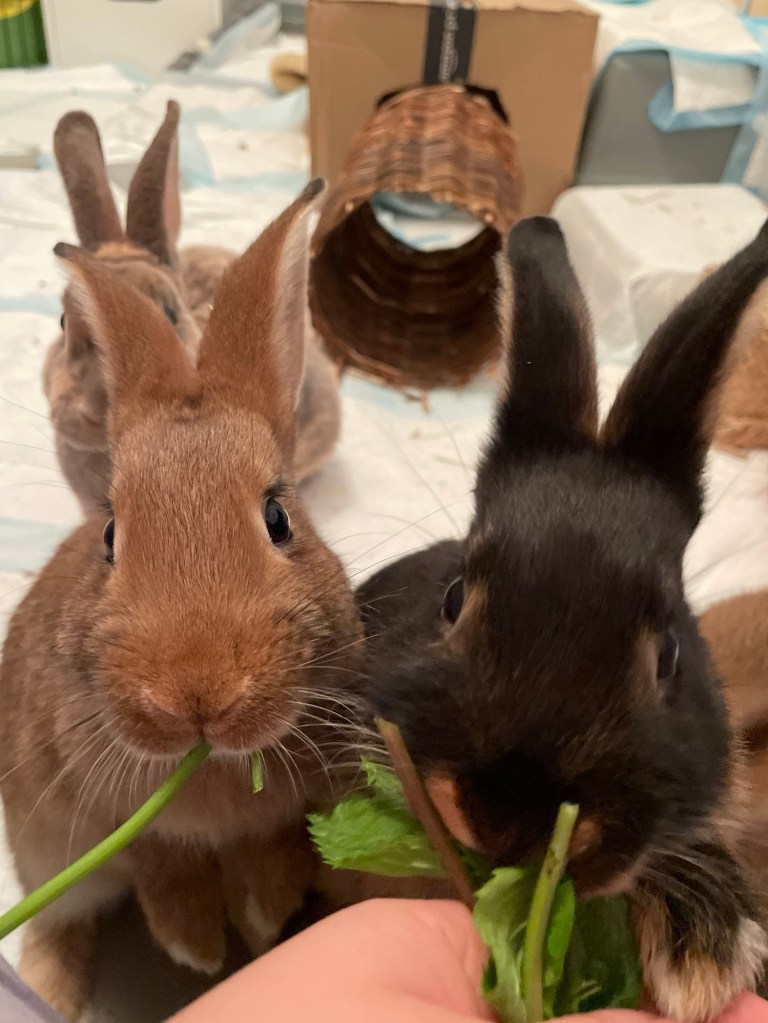
So, be vigilant about things that may be unhealthy for household rabbits and make sure to keep any exciting plants at a distance. And remember to always have unlimited hay that is replenished/changed daily and to serve water in a large bowl.
Also, pay attention to how your rabbits react to new food. Always introduce new food cautiously and gradually because rabbits have sensitive little stomachs.

When it comes to Alfred and Petunia, we try to give them a lot of different herbs, leaves, flowers and branches every day.
Normally, they get about 7 different kinds of fresh leaves every day, mixed with about 5-10 different kinds of herbs/flowers, both dried and fresh. We try to give them lots of fresh foods since we’ve noticed that it makes them more active and helps with their water intake.
Rabbits generally don’t drink as much water as they actually need, which sometimes can lead to gut problems. Especially when they’re molting, they have a bigger need for water intake to help get the ingested fur pass through the gut.
Of course it’s always necessary to brush your rabbits to get rid of as much excess fur as possible.

For us, we provide more dried flowers in the winter than in the summer when we can just go outside and pick some ourselves, but we always give them fresh food, every day. And here in Sweden, we are lucky to have many different plants and tree branches that we can give to our rabbits, so look through the list and see what you can start giving yours today.
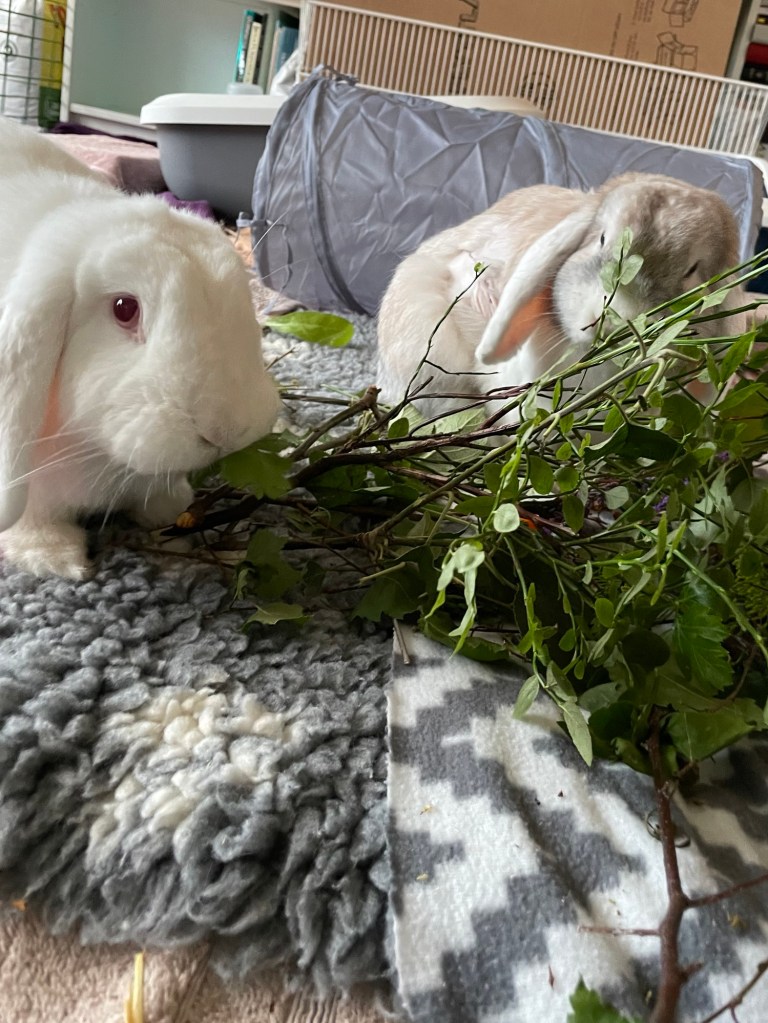
What rabbits can eat – Leaves
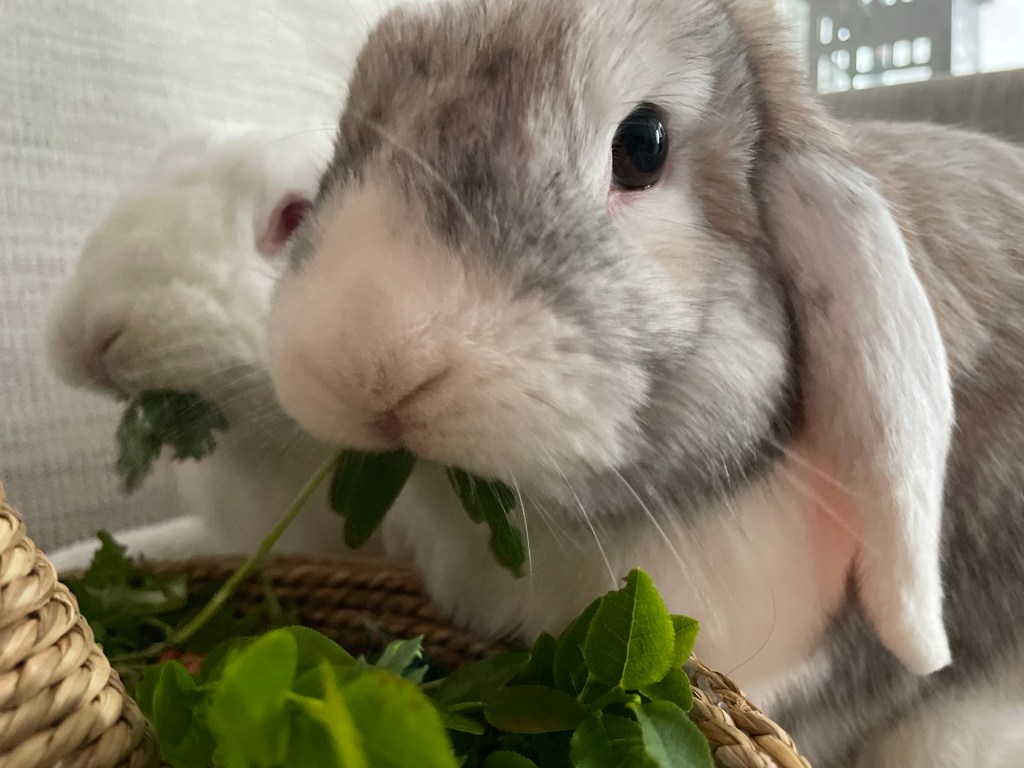
Cauliflower leaves
Bok/Pak Choy
Broccoli leaves
Different kinds of lettuce, but not Iceberg
Cabbage; pointed cabbage, red cabbage, green cabbage, black cabbage Swiss chard
Carrot tops
Arugula (related to dandelions)
Radish tops
Rocket
Celery tops
Chicory
Spinach
What rabbits can eat – Wild plants and flowers

Chamomile
Clover (small amounts)
Cornflower
Daisy
Dandelion – the whole plant, including roots and flowers
Echinacea
Grass (not freshly cut from a lawnmower)
Ground elder
Heather
Hibiscus
Lavender
Mallow (common mallow)
Nettles
Plantain
Ragweed
Roses – leaves and flowers
Sunflower
Thistles (small)
Vetch
Yarrow
What rabbits can eat – Bushes
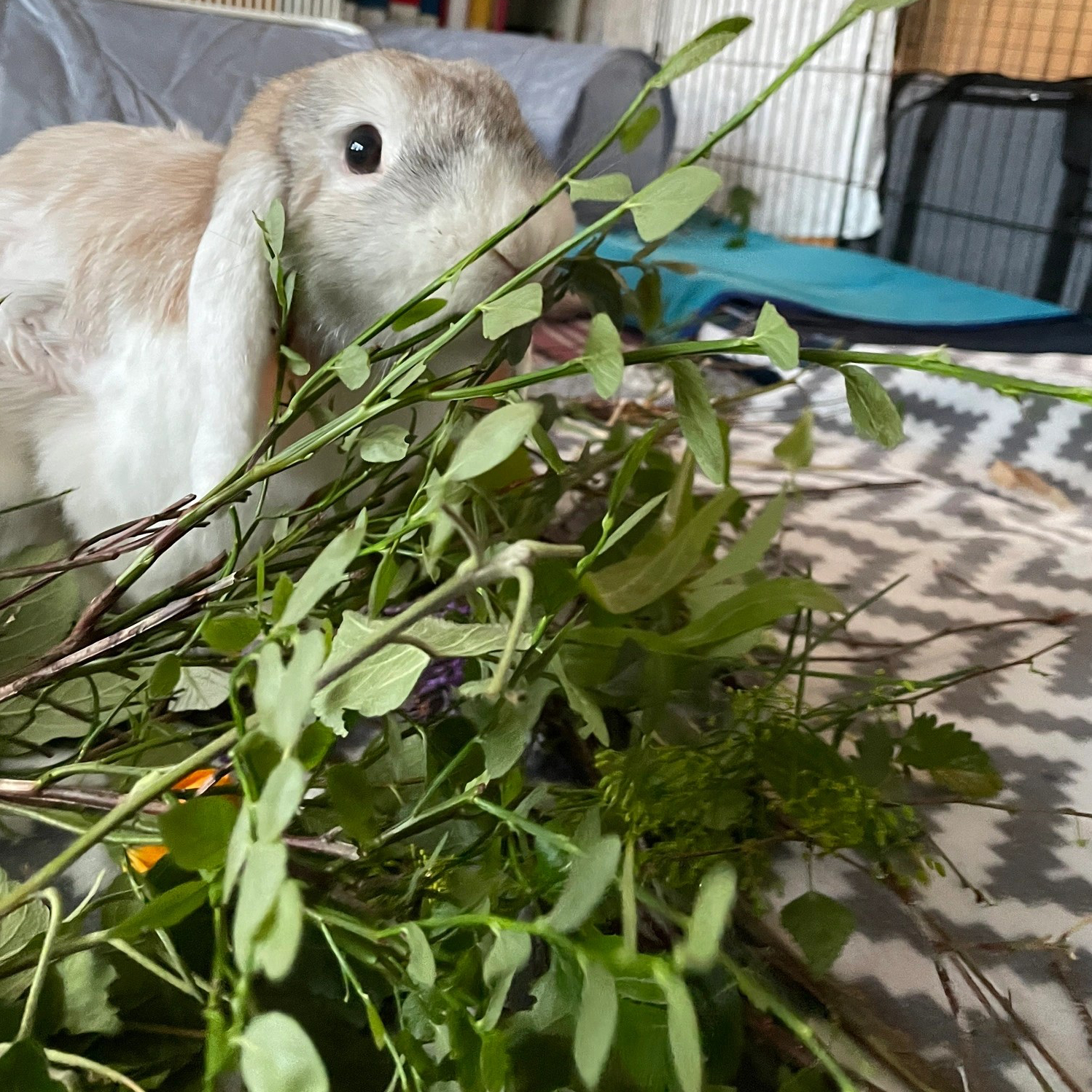
Blackberry leaves (these have sharp thorns, so be careful)
Blueberry twigs
Currant leaves
Raspberry leaves
Strawberry leaves
Wild strawberry leaves
What rabbits can eat – Branches

Alder
Ash
Apple
Aspen
Birch (however, birch is toxic in autumn/winter/spring and should only be given during the summer months when the leaves have come out)
Citrus
Fir
Hazel
Maple
Pear
Rowan
Willow
What rabbits can eat – Herbs
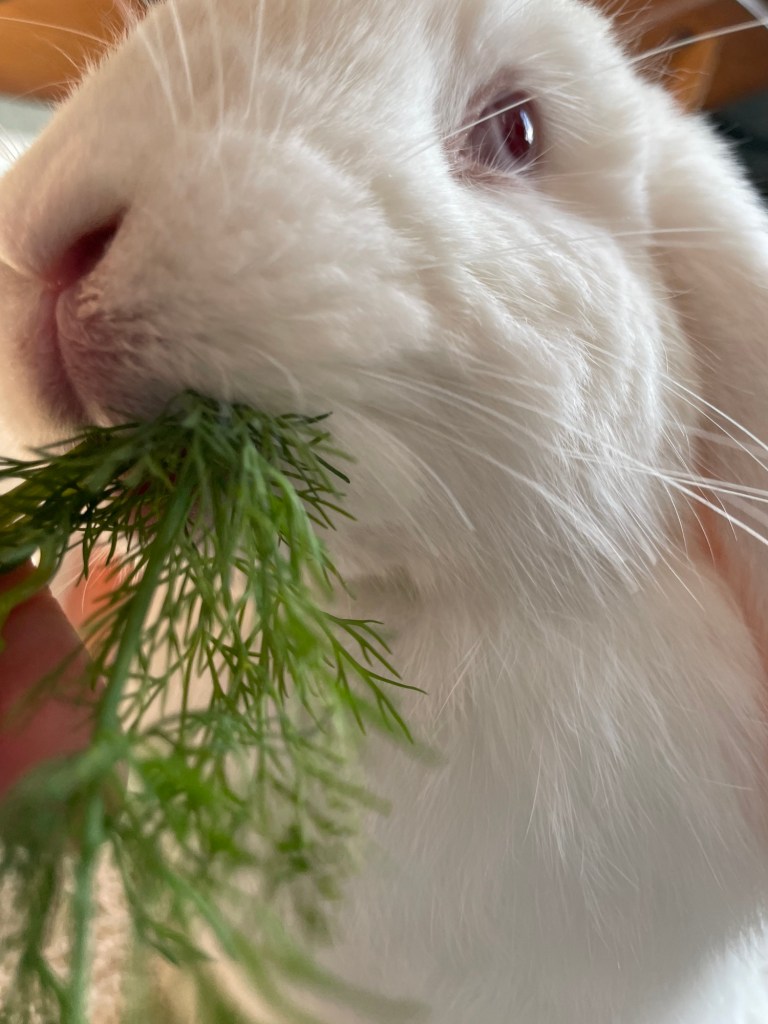
Basil
Cilantro
Dill
Lemon balm
Mint
Oregano
Parsley
Rosemary
Sage
Thyme
What rabbits can eat – Fruits and vegetables
These should only be given in small amounts as treats:
Banana (high in sugar)
Bell pepper
Broccoli
Carrot (high in sugar, but carrot stems is healthier)
Celery
Cucumber
Fennel
Squash
Tomato (no stems or leaves!)
Watercress
Watermelon
In the next post, we’ll go through what is toxic or harmful for rabbits to eat.
Sources:
A. Harenius, E. Almquist & L. Werner. Allt för dina kaniner. 2022. Upplaga 1:2.
Best 4 Bunny: Feeding Rabbits: https://www.best4bunny.com/bunny-care/feeding-rabbits/#vegetables-and-fruit
How-to-Rabbit: https://how-to-rabbit.com/feeding-rules/
Rabbit Welfare Association & Fund: Recommended Vegetables and Herbs: https://rabbitwelfare.co.uk/recommended-vegetables-and-herbs/
SPCA New Zealand: Fresh Foods for Rabbits: https://www.spca.nz/advice-and-welfare/article/fresh-foods-for-rabbits
WaTschudin, Anja & Clauss, Marcus & Codron, Daryl & Liesegang, Annette & Hatt, J.-M. (2010). Water intake in domestic rabbits (Oryctolagus cuniculus) from open dishes and nipple drinkers under different water and feeding regimes. Journal of animal physiology and animal nutrition. 95. 499-511. 10.1111/j.1439-0396.2010.01077.x. https://www.researchgate.net/publication/49622814_Water_intake_in_domestic_rabbits_Oryctolagus_cuniculus_from_open_dishes_and_nipple_drinkers_under_different_water_and_feeding_regimes
 Kaninliv