
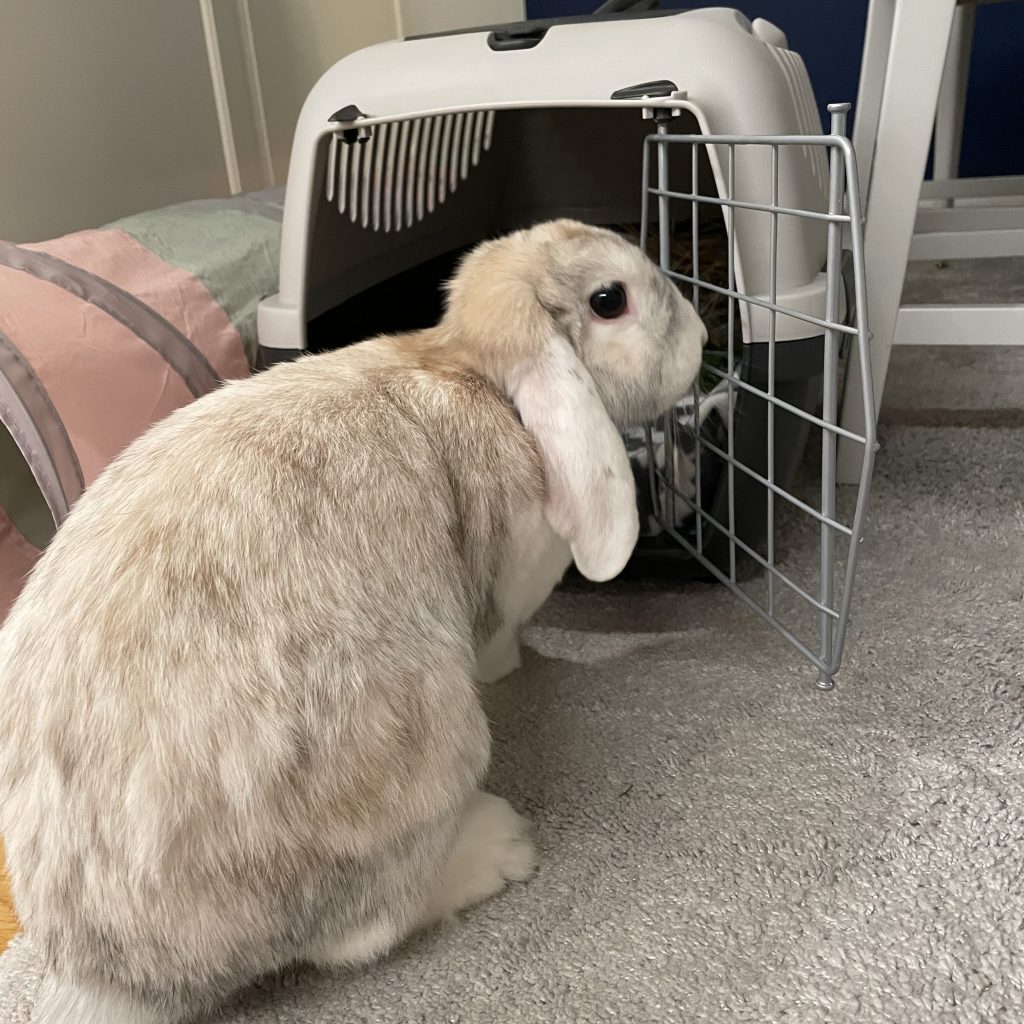
When traveling with rabbits, it’s essential to prioritize their safety and comfort. Avoid unnecessary trips, as rabbits, being prey animals, generally find transportation stressful. However, when travel is unavoidable, there are several steps you can take to make the experience as positive as possible.
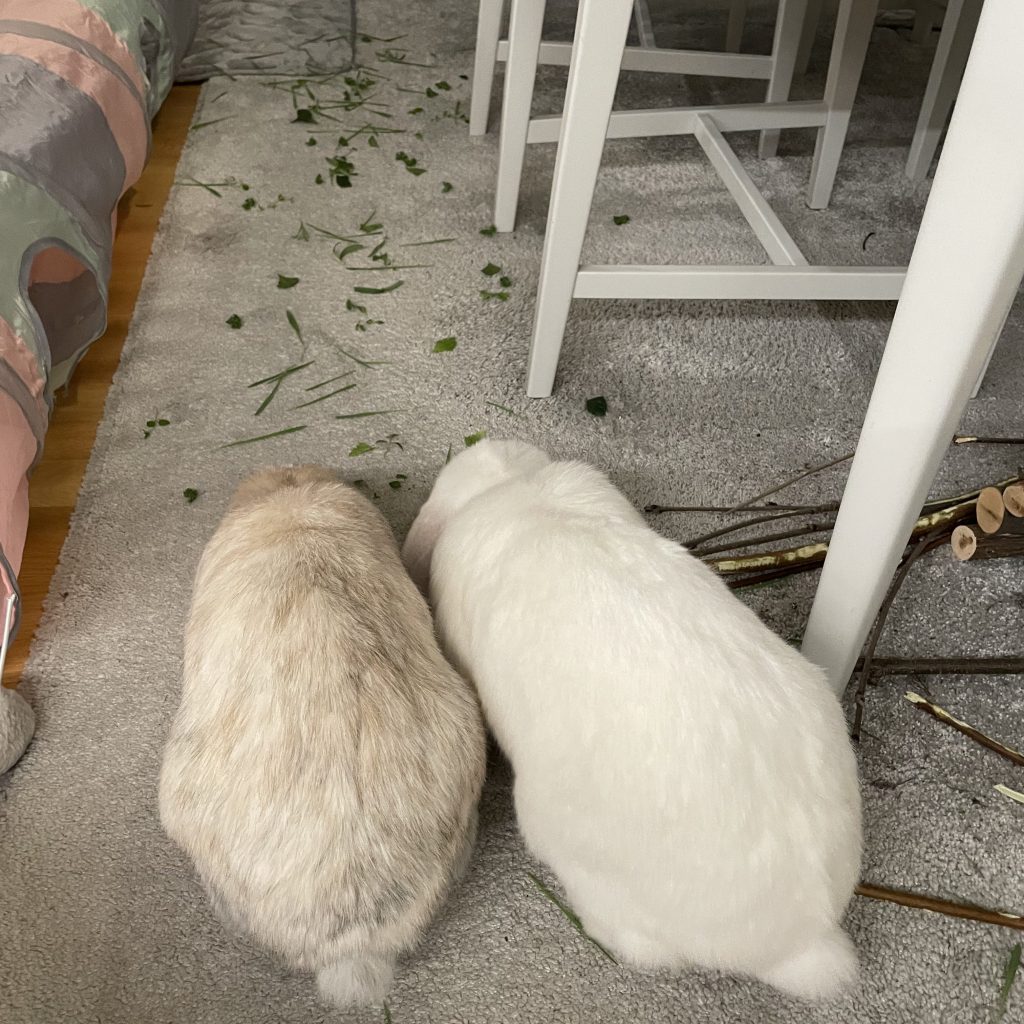
If you have multiple rabbits, it’s crucial to transport them together to minimize stress and avoid potential issues. Separating bonded rabbits can lead to a breakdown in their relationship, requiring a lengthy re-bonding process (which none of us wants). We always bring Alfred and Petunia together, regardless of where we’re going.
A rabbit-savvy vet will never advise against transporting bonded rabbits together, even if only one of them needs care. If a vet advises against bringing them together, it could indicate that they lack sufficient experience with rabbits.

Preparing the Carrier
Choose the Right Carrier
- Use a carrier that opens from both the side and the top to make it easier to place and remove the rabbits gently.
Make the Carrier Comfortable and Secure
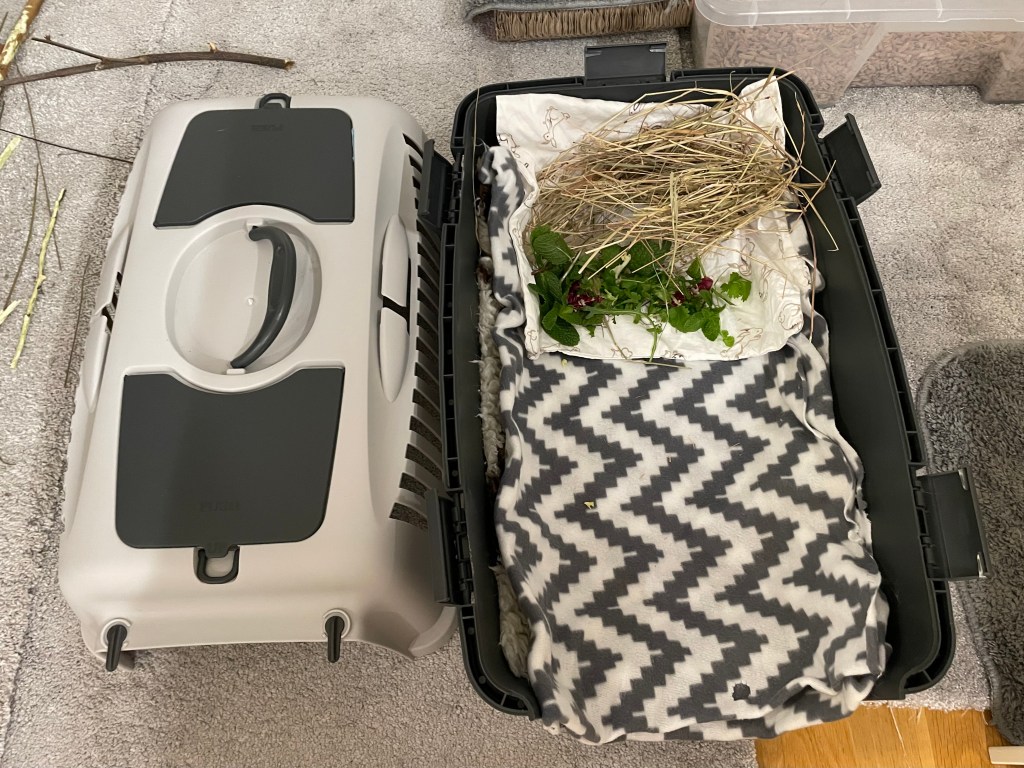
- Place a non-slip surface, such as a cut piece of vetbed, inside the carrier to prevent the rabbits from sliding.
- Ensure the carrier is large enough for the rabbits to turn around comfortably, but not too spacious. Ours measures 55x35x36 cm and is made of hard plastic.
Create Positive Associations
- Let the rabbits gradually get used to the carrier. Place their favorite treats inside to create a positive experience, making it easier to get them into the carrier when it’s time to travel.

During the Trip
Food and Hydration
- Always have hay and their favorite herbs in the carrier. Rabbits need to eat frequently to stay healthy.
- Avoid water bottles due to the potential risk of injury from the spout during sudden stops. For longer trips, offer fresh greens or stop to provide water in a bowl.
- Include fresh herbs and leafy greens in the carrier. Cucumber is a great option, as it contains a high amount of water. If the rabbits are too stressed to drink from a bowl during stops, small pieces of cucumber can be given instead.
Safety Tips
- Secure the carrier in the car using a seatbelt or place it on the floor behind a seat. Slide the seat gently back to stabilize the carrier.
- Avoid transporting rabbits with other pets, especially predators like dogs and cats. If unavoidable, minimize noise, visual contact, and smells between the animals.
Temperature Control
- Maintain a car temperature of around 20°C (68°F), as rabbits are sensitive to heat. Avoid temperatures above 22°C (72°F).
- In warm weather, place a frozen water bottle wrapped in a cotton sock inside the carrier to help the rabbits cool down.
- During colder weather, use fleece or vetbed as bedding to provide extra warmth, or add a rabbit-safe heating pad. Ensure any heating pad is small enough for the rabbits to choose whether to lie against it or not.
Reducing Stress
Calming Products
- Pet Remedy is a natural calming spray containing valerian, vetiver, basil, and sage. Spray a towel and place it in the carrier 30–60 minutes before travel. Never spray directly on the rabbits or immediately place them into a freshly sprayed carrier.
- Monitor the rabbits after the trip, as the calming effect may linger for a while. Petunia once appeared subdued for about an hour after returning home but recovered after about an hour.
Music and Environment
- Play soothing music if the rabbits are accustomed to it and seem to enjoy it.
- Partially cover the carrier with a towel to create a cozy, secure environment.

After the Trip
Offer Treats
- Provide the rabbits with their favorite snacks or scatter treats to encourage them to eat. Some rabbits eat immediately upon returning home, while others need time to recover from the stress of traveling. Scattering food can also motivate them to move around, which is important after being still during the travel.
Monitor Their Health
- If the rabbits don’t start eating on their own within a couple of hours, you may need to feed them Critical Care. Sometimes, a single serving of this recovery formula is enough to stimulate their appetite. If not, consult a veterinarian.
Summary
- Always transport bonded rabbits together to avoid breaking their bond.
- Use an appropriate carrier with a non-slip surface.
- Provide food, hay, and hydrating snacks like cucumber during the trip.
- Maintain a car temperature of around 20°C (68°F).
- Use calming products like Pet Remedy
Thank you for reading, I hope you found this helpful. Good luck with transporting your bunnies!
Have you adopted a rabbit? I’d love to hear your experience with it! Please check out my survey here, the answers will be published in my upcoming book about rabbits. Thank you! ❤
 Kaninliv