

There are many wonderful parts about living with rabbits, one of it is how naturally clean they are. In fact, most rabbits will instinctively pick a corner of their space to use as a toilet. So with a little guidance from you, litter training is usually a smooth and rewarding process.
Whether you’re new to rabbits or trying to clean up after a free-roam bun with questionable aim, this guide is for you.
Why Litter Training Matters
Litter training isn’t just about keeping your floors clean (although, yes – less pee on the carpet is always a win!). It’s also about hygiene, health, and your rabbit’s comfort. A clean and consistent toilet area reduces the risk of infections, protects sensitive feet, and makes daily cleanup much easier for you.
Step 1: Spay or Neuter
The absolutely most important step if you want your rabbits to do their business in certain spots is to spay or neuter them. Unspayed or unneutered rabbits often feel the urge to mark their territory with both urine and poop. Once altered, most rabbits become noticeably cleaner and easier to train. It’s recommended to wait a few weeks post-surgery before beginning serious litter training to allow hormone levels to settle.
And make sure you do this procedure at an exotic vet who’s specialized in rabbits. For female rabbits, the surgery is a little more difficult than with males, so having a rabbit-savvy vet preforming it is necessary.
Also, every rabbit, no matter if they live indoors or outdoors, should be spayed or neutered due to their increased risk of cancers if they’re not.
Step 2: Choose the Right Litter Box
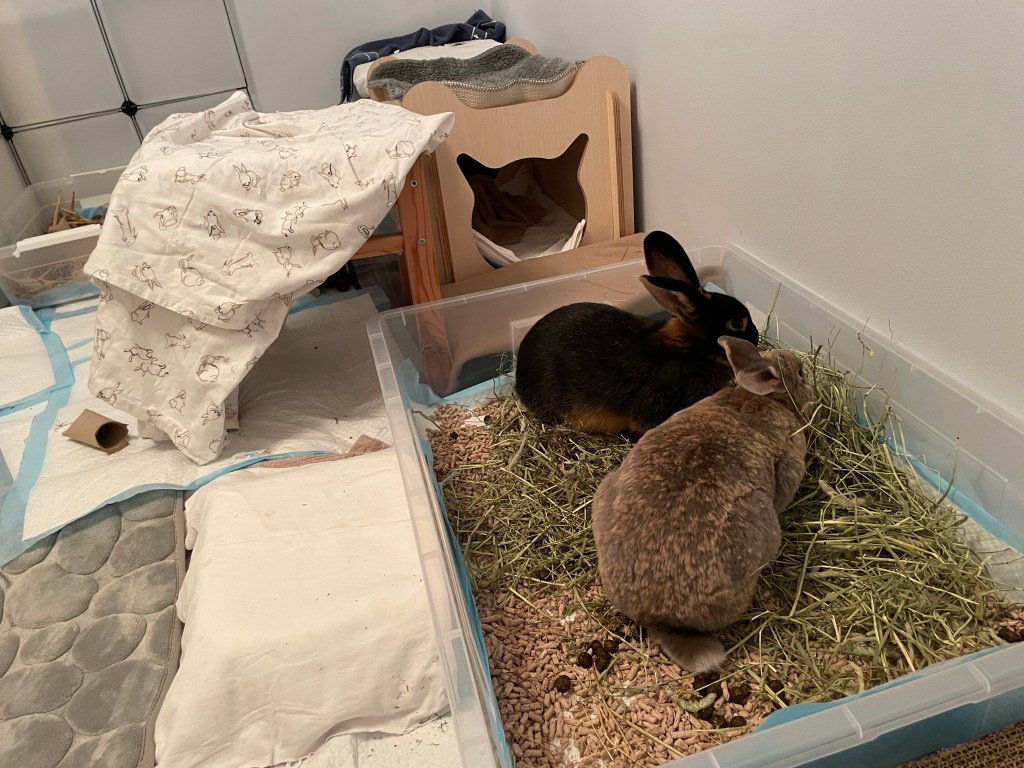
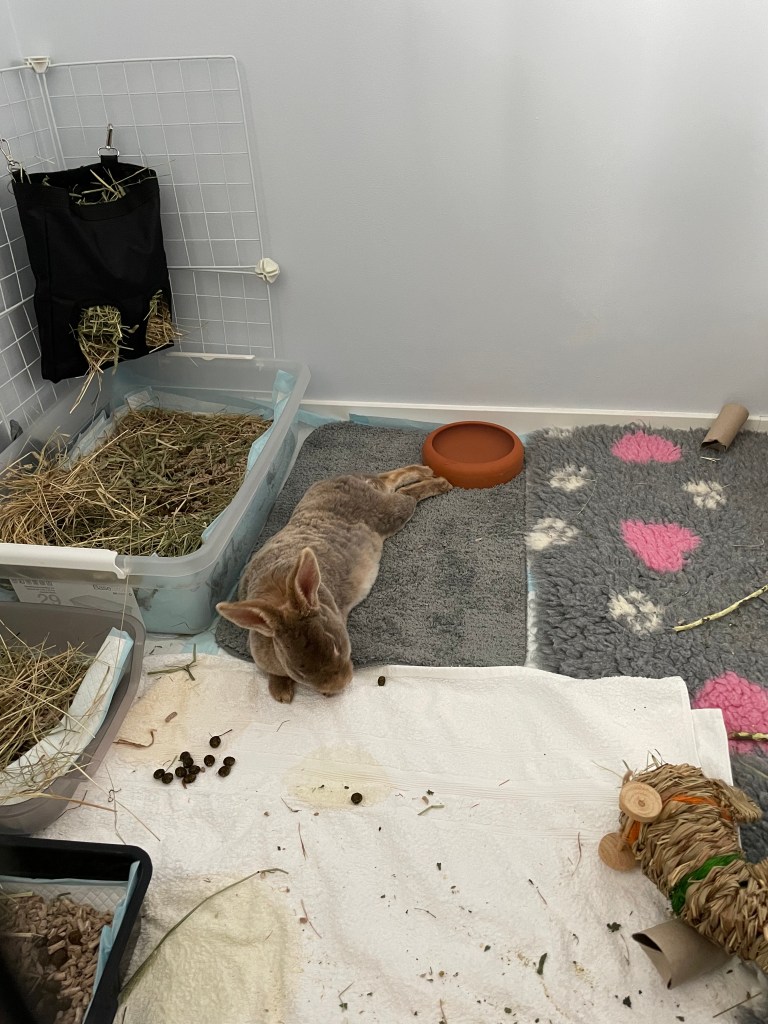
Pick a litter box that’s big enough for your rabbit to turn around in comfortably. A low-sided cat litter box or a simple plastic box work well. We use a large one from Ikea (size 79x57x18 cm) and have a cat scratching board for easier access.
Add a layer of safe, absorbent litter, like paper-based pellets, recycled paper, or hemp. Avoid clay, clumping, and scented litters, as they can be harmful if ingested or cause respiratory issues.
We sometimes use puppy pads at the bottom and always paper based pellets on top (in Sweden we use the one called Toa-Lätt).

Bonus tip: Place hay directly in the litter box or in a hay rack above it. Rabbits love to munch while they poop, and this makes it even more inviting.
Step 3: Start Small
If your rabbit is new to litter training, begin in a limited space, like one room. Place the litter box in the corner where they naturally go. If accidents happen outside the box, gently move the droppings into the litter tray to reinforce the idea. Clean up accidents with a vinegar-water mix to remove the smell and prevent re-marking.
When you see your bunnies going in the litter box, reward them with a small treat, like dried herbs. This can reinforce their good behavior.

Step 4: Add Toilets Where Needed
If your rabbit free-roams, you probably need more than one litter box. Especially in larger spaces or multi-level homes. Rabbits often choose a couple of favorite corners for their business, and it’s easier to work with their habits than against them.

Step 5: Be Patient and Consistent
Litter training can take days or a few weeks depending on your rabbit’s age, personality, and whether they’re neutered. Some will be pros overnight, others may be a little stubborn. That’s okay! Avoid scolding. Rabbits do not respond well to punishments, which never should be used for any kind of animal. Being prey species, rabbits will instead become more scared of you and you’ll risk destroying your relationship.
Always reward good behavior with calm praise or a healthy treat.

Troubleshooting Accidents
- Poop everywhere? Scattered poops are often territorial, especially in newly bonded pairs. Neutering usually helps.
- Peeing on soft surfaces? Some buns can’t resist a cozy rug or cushion. Try removing those items during training, or placing a litter tray on top.
Even spayed and neutered rabbits can be triggered by new scents and feel the need to mark their territory, but it’s less of an urge than in unneutered or unspayed bunnies. - Sudden regression? Check for health issues like a UTI, bladder sludge, or arthritis, and consult a rabbit-savvy vet.

Final Thoughts
Litter training your rabbit is one of the best steps you can take toward a happy, harmonious home together. Once established, your buns will appreciate having a clean, predictable space. And you’ll appreciate not having to follow them around with paper towels.
Just remember that every rabbit learns at their own pace. With patience, encouragement, and a few well-placed hay piles, you’ll be there in no time.
 Kaninliv