
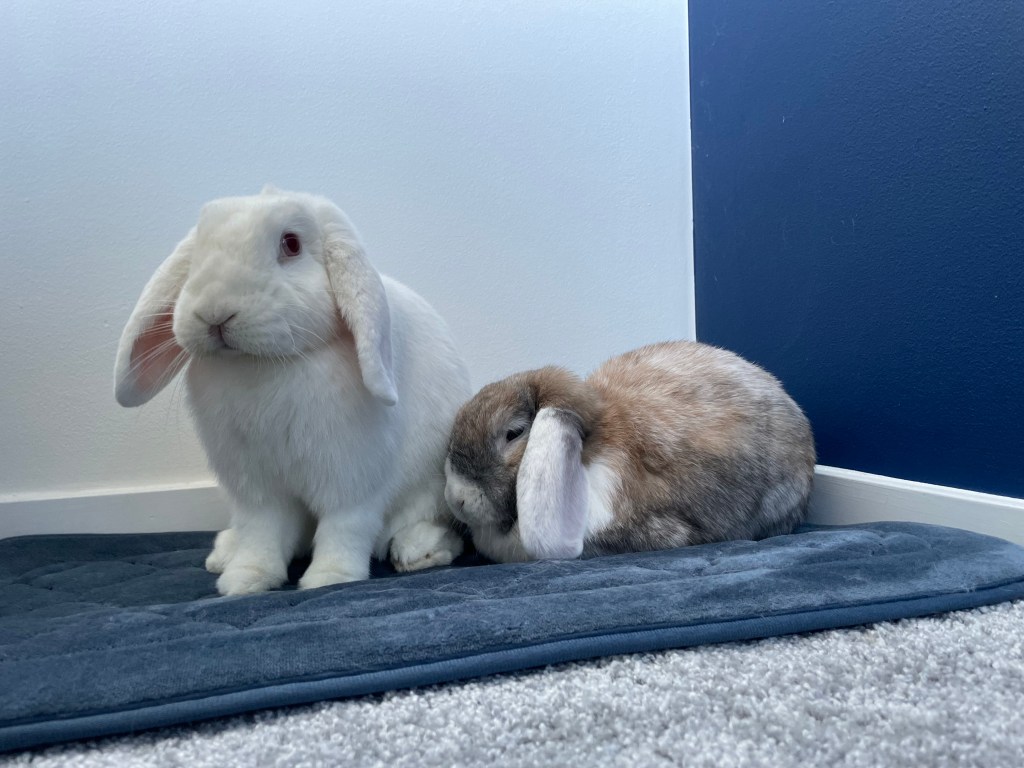
Humans have long been fascinated by the appearance of animals. We’ve bred dogs with flat faces, cats with short legs, and rabbits with hanging ears and squashed noses. They may resemble cuddly toys — but what is life really like for these extremely bred rabbits?
When we breed animals to look “cuter” or more unique in our eyes, we’re also altering their anatomy — often in ways that harm their health and quality of life.
What Does a Healthy, Natural Rabbit Look Like?
A wild rabbit — the original blueprint — typically has:
- Upright ears
- A pointed nose
- A moderate, healthy body weight
When rabbits deviate from this natural appearance, their risk of health problems increases. Certain rabbit breeds have been selectively bred to the point of being unethical — just as with some dogs and cats. It’s hard to understand how this type of breeding is still legal.

Lop-Eared Rabbits: Cute, But at a Cost
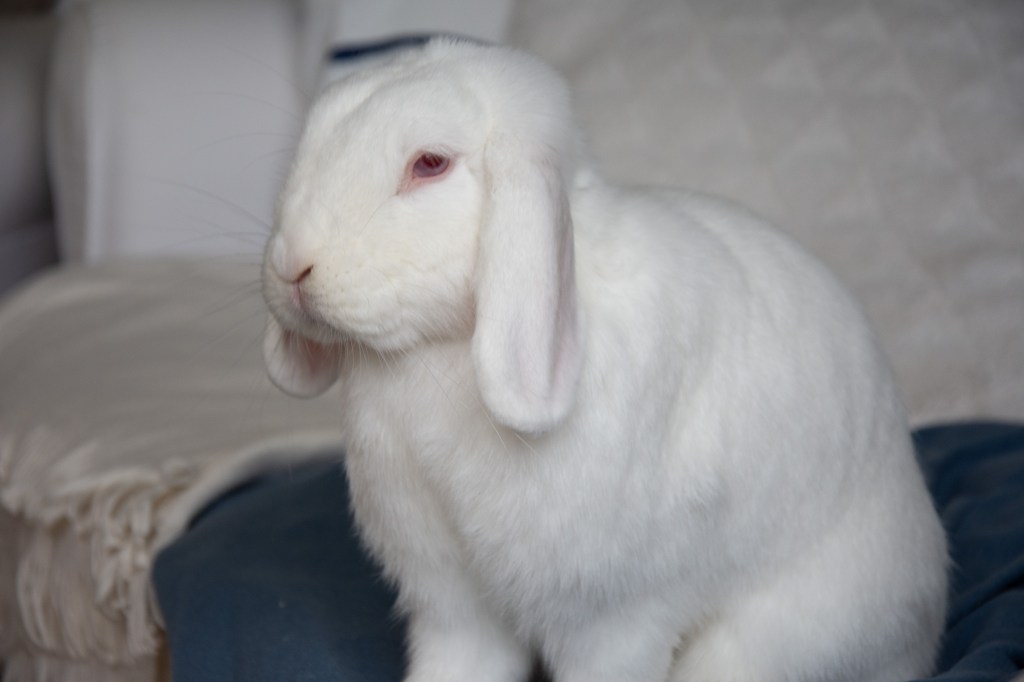
It’s not surprising that rabbits with drooping ears suffer more ear problems. When an ear canal is bred to bend unnaturally, airflow decreases — like a kinked hose that won’t let water through. Lop-eared rabbits have narrower ear canals than those with upright ears, leading to wax buildup, infections, and potential hearing loss.
A study by Johnson & Burn (2019) found that lop-eared rabbits were significantly more likely to have:
- Narrowed ear canals
- Excessive earwax
- Redness and irritation
- Signs of pain during ear exams
They were also more likely to suffer from dental problems such as misaligned front teeth, overgrown molars, sharp enamel edges, and painful dental spurs — compared to rabbits with a more natural skull shape.
Another study by Böhmer & Böhmer (2017) analyzed skull and jaw variations in domestic rabbits and found a clear link between abnormal skull shape and dental disease. Rabbits with shorter, broader skulls were much more likely to develop painful dental conditions.
Swedish Study Confirms the Problem
The Swedish Rabbit Welfare Association (SKVF), in collaboration with Animallogos Veterinary Health, conducted a study on 101 rabbits visiting the clinic for reasons unrelated to ear issues. None of the owners suspected their rabbits had ear problems.
The findings:
- 64% of lop-eared rabbits had ear diseases — unnoticed by their owners
- Only 5.9% of upright-eared rabbits had similar issues
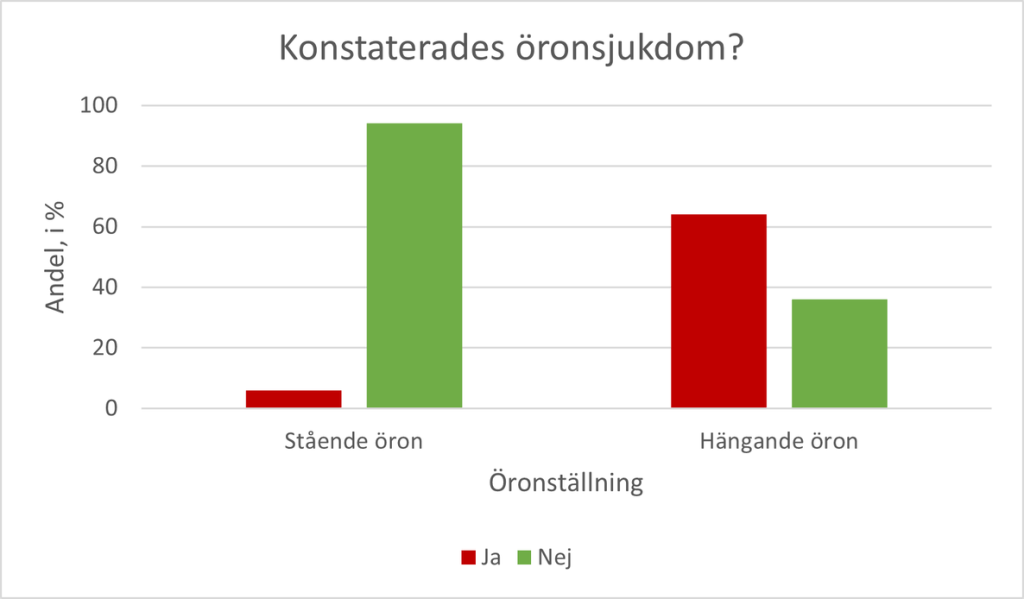
This suggests that many rabbits suffer in silence. SKVF hopes these results will raise awareness among rabbit owners and breeders about the hidden health risks of certain physical traits, especially drooping ears. They emphasize the importance of regular ear checks and veterinary visits to catch issues early.
The Rabbit Welfare Association & Fund (RWAF) also highlights the risks of lop ears and encourages vigilance in spotting behavioral changes that could indicate illness. For breeds with extreme traits, proactive healthcare is even more crucial.
Flat Faces Mean Cramped Skulls
Brachycephaly — the condition of having a shortened skull and flat face — is another widespread issue in some rabbit breeds. When the skull is bred to be shorter, everything inside gets unnaturally compressed: teeth don’t fit properly, airways narrow, and health problems follow.
Common consequences include:
- Dental misalignment (teeth growing inwards or out of place)
- Breathing difficulties
- Higher risk of infections and chronic pain
This is the same problem seen in many flat-faced dog and cat breeds — but it’s talked about far less when it comes to rabbits.
The flatter the face, the less room there is for essential structures inside the head. This isn’t just theory — it’s simple anatomy.

Experience and Research Point in the Same Direction
Veterinary studies and the collective experience of rescue organizations that have worked with thousands of rabbits both support the same conclusion: lop-eared and brachycephalic rabbits are more prone to serious, often chronic health issues.
In light of this, it becomes difficult to argue that these features don’t pose health risks.

The Power of Your Choices
It might seem harmless to choose a rabbit with droopy ears or a flat nose. But behind that cute appearance could be a lifetime of hidden suffering. When we know better, we must do better — for the rabbits’ sake.
As an owner, breeder, or animal lover, you have the power to make a difference. By making informed choices about the types of breeds we support and how we talk about their appearance, we can reduce suffering and promote better welfare.
How You Can Help:
- Say no to extreme breeding that compromises animal health
- Adopt instead of buying from breeders — so many rabbits need new homes (if you’d like an extreme bred rabbit, there are several of them waiting in rescues for their forever home)
- Share this knowledge with others considering getting a rabbit
- Schedule regular health check-ups, especially for extreme bred rabbits
- Support organizations working to improve rabbit welfare
Your choices matter — for every individual rabbit, and for the future of the species.
Sources:
Johnson, J. C., & Burn, C. C. (2019). Lop‐eared rabbits have more aural and dental problems than erect‐eared rabbits: a rescue population study. Veterinary Record, 185(24), 758-758.
Böhmer, C., & Böhmer, E. (2017). Shape Variation in the Craniomandibular System and Prevalence of Dental Problems in Domestic Rabbits: A Case Study in Evolutionary Veterinary Science. Veterinary Sciences, 4(1), 5. https://doi.org/10.3390/vetsci4010005
Sveriges kaninvälfärdsförening: https://skvf.se/kanininfo/v-durskaniner.html
Animallogos djurhälsa: https://animallogos.se/oronsjukdomar-hos-kaniner/
Rabbit Welfare Association and Fund: https://rabbitwelfare.co.uk/brachycephaly/
Agria: https://www.agria.se/smadjur/artiklar/sjukdomar-och-skador/sjukdomar-hos-kaniner/
Smådjurschansen: https://www.smadjurschansen.se
Ekenstedt KJ, Crosse KR, Risselada M. Canine Brachycephaly: Anatomy, Pathology, Genetics and Welfare. J Comp Pathol. 2020 April ;176:109-115. Available from: https://doi.org/10.1016/j.jcpa.2020.02.008
Mestrinho, L. A., Louro, J. M., Gordo, I. S., Niza, M. M. R. E., Requicha, J. F., Force, J. G., & Gawor, J. P. (2018). Oral and dental anomalies in purebred, brachycephalic Persian and Exotic cats. Journal of the American Veterinary Medical Association, 253(1), 66-72. Retrieved May 1, 2024, from https://doi.org/10.2460/javma.253.1.66
Mitze S, Barrs VR, Beatty JA, Hobi S, Bęczkowski PM. Brachycephalic obstructive airway syndrome: much more than a surgical problem. Vet Q. 2022 November 15; 42(1):213-223. Available from: https://doi.org/10.1080/01652176.2022.2145621
Rooney, N., & Sargan, D. (2010). Welfare concerns associated with pedigree dog breeding in the UK. Animal Welfare, 19(S1), 133–140. doi:10.1017/S0962728600002335
Sieslack J, Farke D, Failing K, Kramer M, Schmidt MJ (2021) Correlation of brachycephaly grade with level of exophthalmos, reduced airway passages and degree of dental malalignment’ in Persian cats. PLOS ONE 16(7): e0254420. https://doi.org/10.1371/journal.pone.0254420
 Kaninliv