
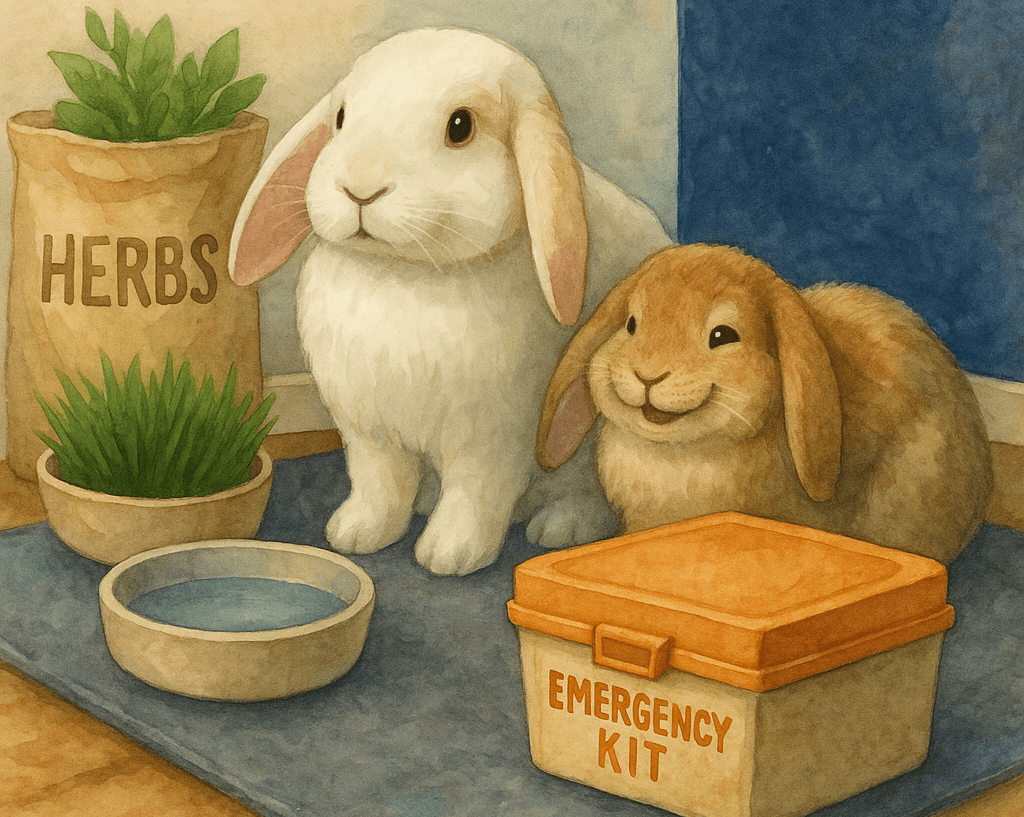
This article can be found in Swedish here: Hemberedskap för dig och dina kaniner
Preparing for a crisis isn’t about building a bunker in your basement. It’s about caring for yourself and your family, including the smallest family members. Like our rabbits.
We live in times when things can change quickly. Power outages, water contamination, cyberattacks, terrorism, extreme weather, or disruptions in payment systems are examples of crises that can happen, and indeed have happened.
With proper preparation, we can handle difficult situations better, whatever comes our way.
So what do we need at home to ensure both we and our rabbits can cope with a crisis?
Crisis Supplies for Humans
The Swedish Civil Contingencies Agency (MSB) recommends that each household have enough supplies for at least seven days. That means having your own access to water, food, heat, lighting, communication, hygiene products, and necessary medications.
Having an emergency kit easily accessible means you can act calmly and quickly, even if the electricity goes out in the middle of the night or your phone stops working.
MSB’s recommended items include:
- Water (at least 3–5 liters per person per day)
- A water filter or purification tablets
- Non-perishable food (canned or dried)
- Camping stove or portable stove + fuel
- A heat source powered by for example gas or wood
- A battery, solar, or hand-crank radio
- Flashlight and extra batteries
- Tea lights, candles, and matches/lighter
- Cash (in case credit cards don’t work)
- A first-aid kit
- Hygiene items: menstrual products, wet wipes, disinfectant
- Sleeping bag, blankets, warm clothing
- A written list of important phone numbers

Preparedness for Rabbits – What to Consider
Our pets depend entirely on us. And unlike dogs or cats, rabbits are especially sensitive to sudden temperature changes, food shortages, and stress. This means that their preparedness requires extra care.
Water and Food for Rabbits
During a crisis it may be difficult to get certain items, so maintain a small reserve of food, water, heat sources, and medications at home.
Adult humans need about 3–5 liters of water per day; rabbits drink at least 100 ml per kilogram of body weight daily and water should be changed twice a day. And it’s better to have too much than too little.
A 2 kg rabbit needs at least 400 ml per day, that’s about 2.8 liters per week. Two rabbits? That’s 5.6 liters or more. And more could be needed in case of illness since sick rabbits need more fluids.
Keep jugs of water and refresh them regularly. Water purification tablets are useful too.
Stock extra hay, bedding, and pellets pellets are a good backup to hay even if your rabbits aren’t used to them; they can be mashed in water if Critical Care isn’t available.
Dried herbs, roots, and twigs are also easy to store long-term.
Toilet Solutions
Puppy‑pads take up little space and absorb moisture well. They’re great in litter boxes or transport carriers. Keep a stock along with extra paper based litter.

Heat and Cold
Rabbits are sensitive to both cold and heat, so monitor temperature changes carefully:
- In winter blackouts, fleece blankets and Vetbeds help retain warmth. Placing them on the floor helps protect rabbits from cold surfaces.
- In summer, cotton sheets or cooling stones (like ceramic plates) are refreshing.
- If there’s still power, a microwaveable heating pad can help when it’s cold, while a frozen Ice Pod offers cooling during hot days.

Rabbit First‑Aid Kit
A well-stocked first‑aid kit can mean a lot, especially if veterinary care isn’t accessible.
Suggested items for the first-aid kit include:
- Critical Care (for supportive feeding) + feeding syringe
- Bio‑Lapis (prebiotic rehydration solution)
- Styptic powder/cornstarch (for minor bleeding from cutting the pulp)
- Ear cleaner
- Medical-grade honey (for wound care)
- Saline solution (for eyes or wound cleaning)
- Aloe vera gel (for dry skin or pressure sores)
- Disinfectant gel
- Disposable gloves
- Bandages, small towel, flashlight
- Blunt-tip scissors
- Syringes of various sizes
- Thermometer
- Pet Remedy (calming spray)
Store everything in a clear plastic box labeled “Rabbit Emergency Kit.”
If you have a prescription for pain relief (like Metacam), keeping an unopened bottle at home could be wise if vet access becomes limited.

Final Thoughts
Home preparedness isn’t about fear, it’s about responsibility, care, and security for you, your family, and the animals that rely on you.
It doesn’t have to be costly or overwhelming – each small step adds peace, control, and hope.
Start with what you already have, make a list of what’s missing, then build up your supplies gradually. Because something is always better than nothing.
Together, we can ensure safety for ourselves and our loved ones, no matter what happens.
Further reading:
Myndigheten för samhällskydd och beredskap (Swedish Civil Contingency Agency): In Case of Crisis or War: https://rib.msb.se/filer/pdf/30874.pdf
Myndigheten för samhällskydd och beredskap (Swedish Civil Contingency Agency): Basics of Home Preparedness: https://www.msb.se/en/advice-for-individuals/home-preparedness–prepping-for-at-least-a-week/basics-of-home-emergency-preparedness/
Articles in English:
- 11 Things Your Rabbit Does – and What They Actually Mean
- Articles in English
- Articles: Fun Facts
- Articles: Rabbit Activities
- Articles: Rabbit Diet
- Articles: Rabbit Health
- Articles: Rabbit Housing
- Articles: Rabbit Myths
- Blogg – Kaninliv
- Common Rabbit Myth: Male Rabbits Can’t Be Friends
- Did You Know?
- Five Things We Do For Fun
- Food Enrichment for Rabbits
- Health Issues in Lop-Eared Rabbits
- Health Problems in Rabbits – When Appearance Comes at a Cost
- Litter Training Your Rabbits
- Nyhetsbrev
- Om oss
- Rabbit Adopters!
- Rabbit Behavior
- Rabbit Myth: Rabbits Can Be Bathed
- Rabbit Myth: Rabbits Can Live on Pellets/Muesli/Carrots
- Rabbit Myth: Rabbits Should Live in Cages
- Rabbits and Harnesses
- Transporting Rabbits
- What Rabbits Can Eat – The List
- Why Harnesses and Clothes are Dangerous for Rabbits
 Kaninliv